

Bioacoustics Monitoring Recording Units
A lot of wildlife activity happens when nobody is watching – before dawn, after dark, deep in cover. Bioacoustic monitoring fills that gap. We deploy recording units on your property or project site, analyze the data using industry- standard acoustic software, and deliver a clear report documenting what species are present, how often and where. It’s one of the most efficient and non-invasive ways to document wildlife on a property.
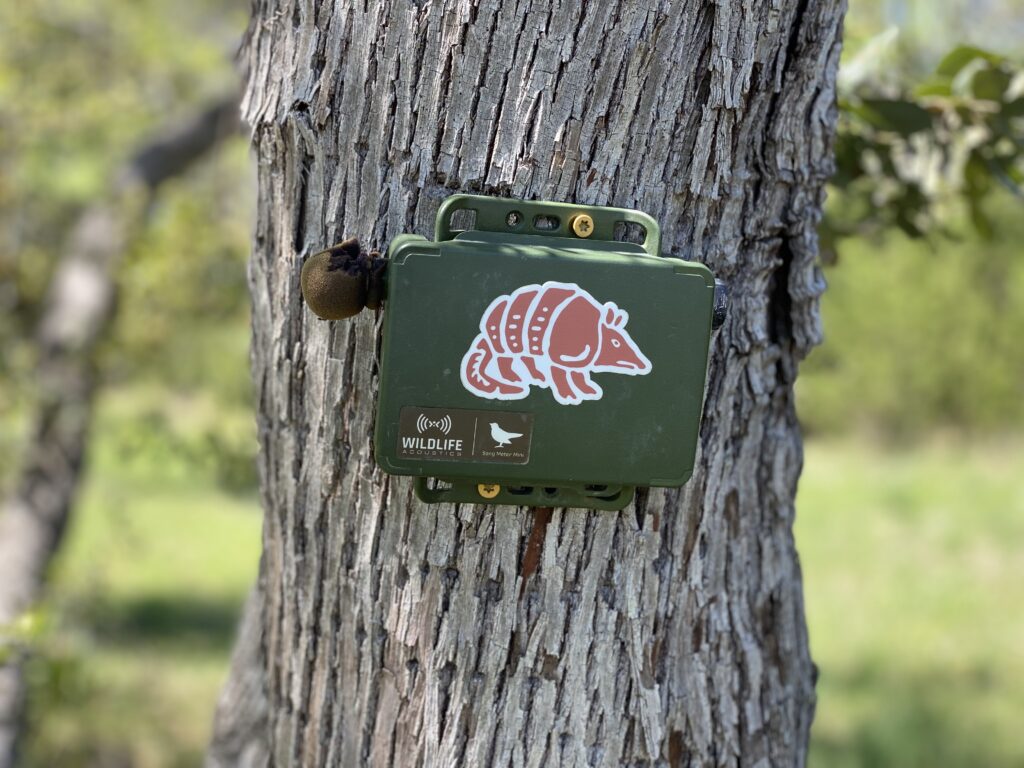
Unlocking Nature’s Sounds: Insights Through Bioacoustic Monitoring
Bioacoustic monitoring enables researchers, conservationists, and wildlife enthusiasts to gain valuable insights into the behaviors and habitats of various species and to help identify cryptic species.
Applications for bioacoustics monitoring:
Wildlife Research: Gain valuable insights into the behavior, distribution, and population dynamics of various wildlife species for research and conservation purposes.
- Ecological Monitoring: Monitor changes in biodiversity, habitat use, and ecosystem health over time, facilitating informed management decisions and conservation efforts.
- Bioacoustic Studies: Explore the acoustic landscape of natural environments and study animal vocalizations, communication patterns, and vocal behaviors.
- Species Specific Surveys: Conduct comprehensive surveys to assess species richness, abundance, and diversity within a given area, aiding in habitat management and restoration initiatives.
Why Bioacoustics Monitoring?
Traditional wildlife surveys capture a snapshot — a few hours on the ground, on a single day. ARUs do something fundamentally different: they run continuously recording everything from pre-dawn songbird activity to nocturnal bat foraging, across days or weeks at a time. The result is a far more complete picture of what’s actually living on a property than a single site visit can provide.
ARUs are also non-invasive. There’s no trapping, no disturbance to habitat, and no need for repeated visits during the survey period — making them practical for working ranches, sensitive habitats, and properties where access is limited.
Common applications include:
- Wildlife Management Exemption (WME) census documentation — ARU surveys satisfy the population monitoring and census requirements for Texas wildlife tax valuation, with a professional report you can submit directly to your appraisal district
- Threatened & endangered species assessments — presence/absence surveys for species like the Golden-cheeked Warbler and Houston Toad, where acoustic detection is often more reliable than visual observation alone
- Pre-development habitat assessments — baseline biodiversity documentation for environmental consultants and developers navigating sensitive habitat or permitting requirements
- Baseline biodiversity surveys — establishing a species inventory for newly acquired properties, conservation easements, or long-term land stewardship planning.
Get Started Today:
Ready to take your wildlife management efforts to the next level? Contact us today to learn more about bioacoustics monitoring and how they can benefit your research and conservation and wildlife management projects.