Welcome to Lupine Land Services
We are a dedicated provider of comprehensive land management solutions.
The Texas Hill Country is unlike anywhere else — and at Lupine Land Services, we’re proud to help local landowners steward their land through custom wildlife management plans that balance conservation, compliance, and the Texas way of life.
Backed by more than 20 years of combined experience in conservation and wildlife management, Lupine Land Services offers personalized support, flexible options, and competitive pricing — because every property and landowner deserves a plan that truly fits.
Are you ready to make the switch from traditional ag or timber valuation to a wildlife exemption?
Whether you are transitioning from an agricultural exemption to wildlife tax valuation, updating an existing wildlife management plan, or implementing qualifying wildlife management practices such as habitat control, predator management, or supplemental water, our team provides practical, locally informed guidance every step of the way.
Lupine Land Services has all the services, products and experience to make the entire wildlife management process easy and stress-free.
Our Wildlife Services

If you want trusted, local support to help you switch from ag to wildlife, or to manage your current exemption with confidence, we’re here to help.
What Is a Wildlife Tax Valuation in Texas?
In Texas, landowners can maintain an open-space valuation by managing their property for native wildlife instead of traditional agricultural production. Qualifying for a wildlife exemption requires implementing approved wildlife management practices, documenting activities, and submitting a wildlife management plan to your county appraisal district.
We also offer a wide range of environmental, beekeeping, and agricultural services:

About the Lupine Land Services Team
Lupine Land Services was founded on by one idea: how can we best help our neighbors restore their land, enhance their property and help to enjoy the land to its fullest extent.
We are a husband and wife team with 20+ years of experience in wildlife management, biology, conservation, agricultural farming, and building partnerships with private landowners in Texas.

Trusted Wildlife Management Expertise Across Texas
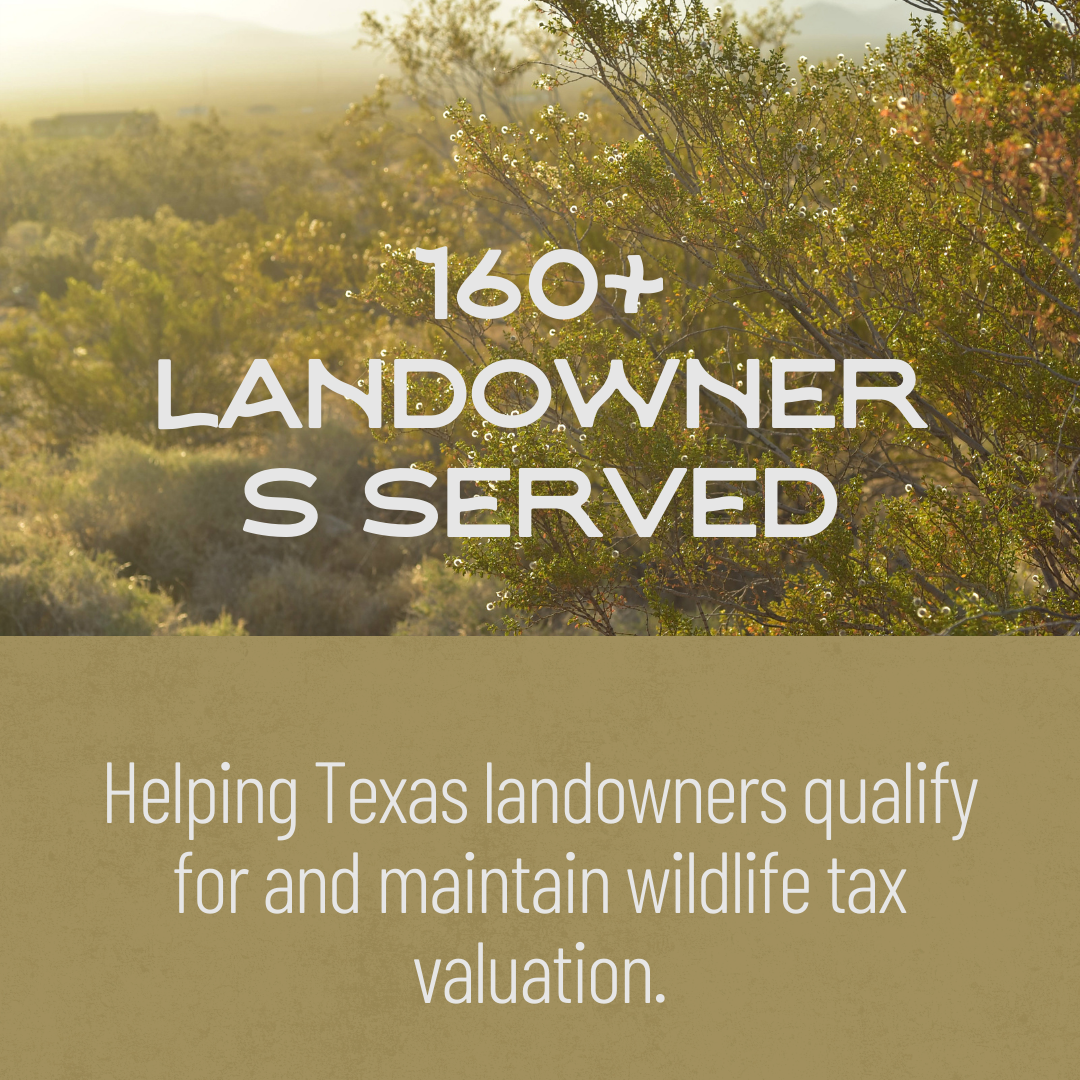
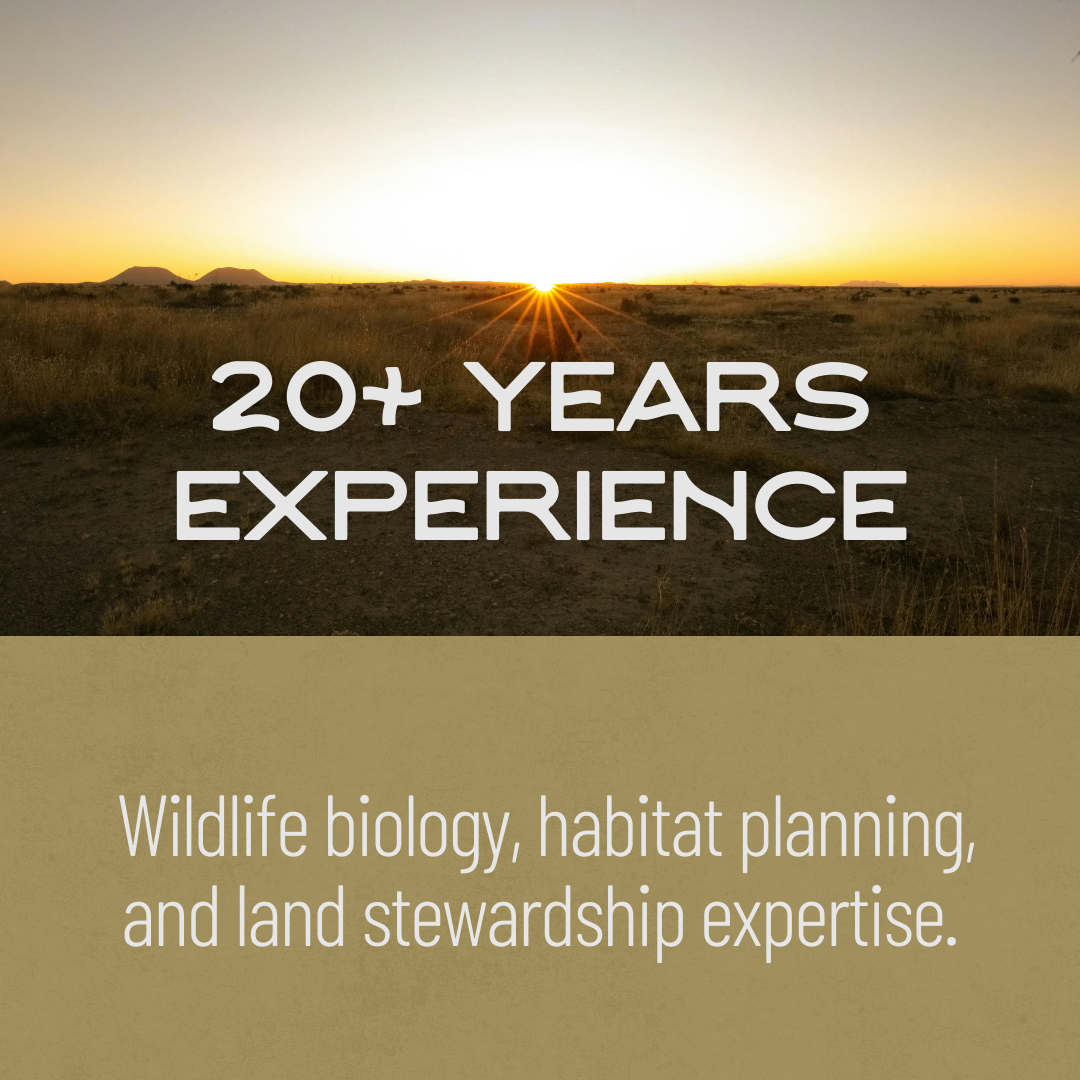
With more than 20 years of combined experience in wildlife biology, land stewardship, and conservation planning, Lupine Land Services has helped over 160 private landowners successfully navigate wildlife tax valuation requirements and improve habitat across the Texas Hill Country and beyond.
Our team has developed and implemented wildlife management plans on over twenty thousand acres of working lands, supporting both property tax compliance and meaningful conservation outcomes. From habitat restoration and predator management to species-specific surveys and long-term land stewardship strategies, we provide practical guidance grounded in real field experience.
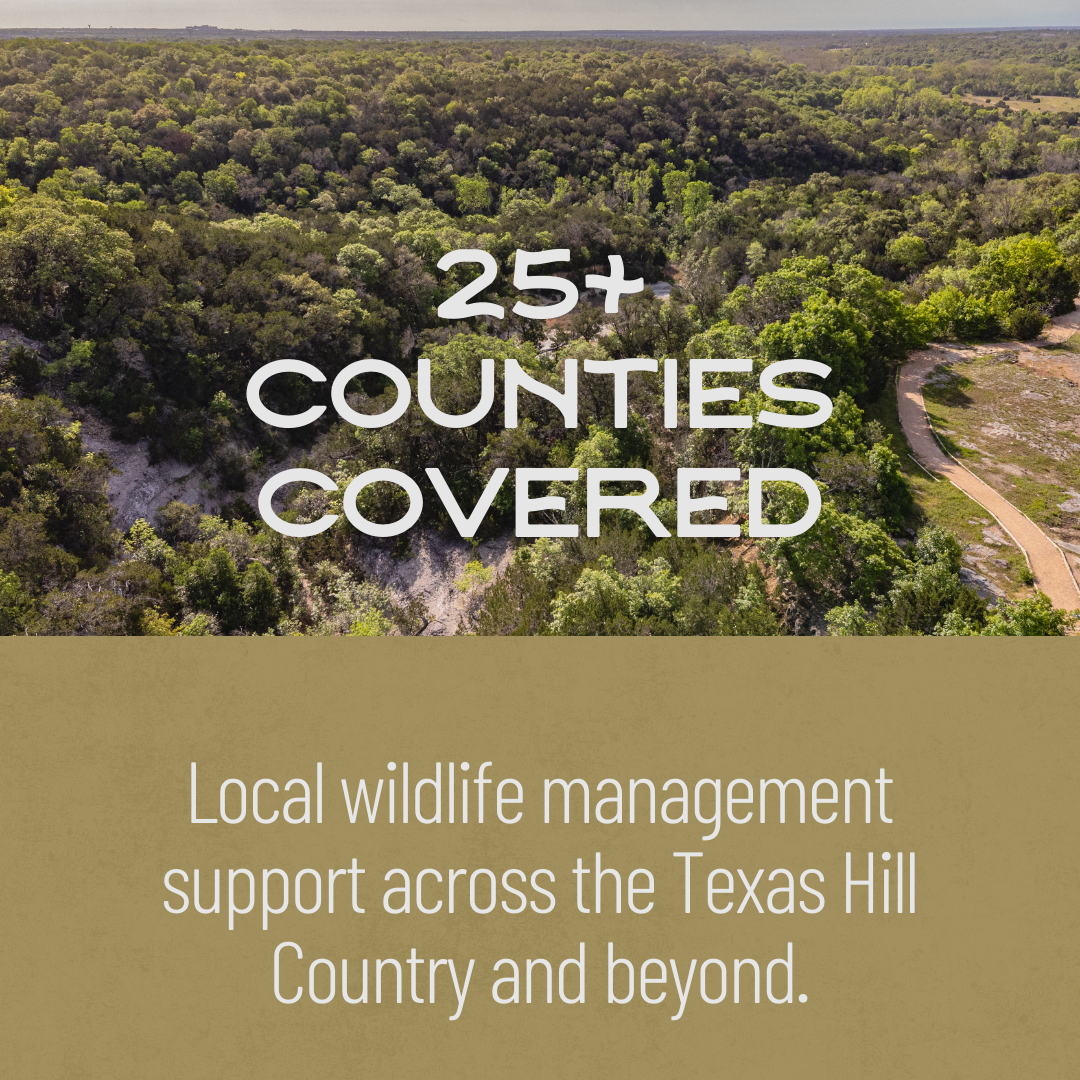
Lupine Land Services works with landowners in more than 25 counties across Central and South Texas, including Hays, Blanco, Comal, Gillespie, Kendall, Travis, and surrounding counties on the Edwards Plateau. Our expertise includes work with sensitive and threatened species such as the federally listed Golden-cheeked Warbler and the Houston Toad, as well as game species, pollinator habitat, and broader ecosystem management.
Whether you are transitioning from an agricultural exemption, updating a wildlife management plan, or planning long-term improvements for your property, you can trust that our recommendations are based on science, local knowledge, and a deep understanding of Texas landownership realities.
Wildlife Management Services Across the Texas Hill Country
We work with landowners in:
- Bastrop County
- Bell County
- Bexar County
- Blanco County
- Burnet County
- Caldwell County
- Comal County
- Ector County
- Fayette County
- Gillespie County
- Guadalupe County
- Hays County
- Kendall County
- Kerr County
- Lampasas County
- Lee County
- Llano County
- Mason County
- Mills County
- San Saba County
- Travis County
- Williamson County
Wildlife Exemption & Wildlife Management FAQs
How do I switch from an agricultural exemption to a wildlife exemption in Texas?
To transition from an agricultural valuation to a wildlife tax valuation, landowners must already qualify for open-space valuation and then implement approved wildlife management practices such as habitat control, predator management, supplemental water, or population monitoring. A wildlife management plan, as well as an Application for 1-d-1 (Open-Space) Agricultural Use Appraisal must be submitted to your county appraisal district outlining how the property will be managed for native wildlife.
Do I need a wildlife biologist to qualify for a wildlife exemption?
Texas law does not require a wildlife biologist, but working with an experienced wildlife management professional can significantly improve the likelihood of approval and long-term compliance. A properly written wildlife management plan ensures required practices are documented and implemented correctly.
What are the qualifying wildlife management practices in Texas?
Landowners must complete at least three of seven approved practices, which include habitat control, erosion control, predator management, providing supplemental water, providing supplemental food, shelter improvements, and conducting wildlife population census activities.
How much does a wildlife management plan cost in Texas?
Wildlife management plan pricing can vary widely across Texas depending on acreage and consultant approach. At Lupine Land Services, we offer clear, flat-rate pricing for wildlife management plans so landowners know exactly what to expect from the start.
Our standardized planning process is designed to help landowners efficiently transition from agricultural valuation to wildlife tax valuation, meet county appraisal requirements, and implement qualifying wildlife management practices without unexpected fees.
How many acres are required for a wildlife exemption?
There is no single statewide minimum acreage requirement for wildlife tax valuation in Texas. Eligibility depends on local appraisal district guidelines, ecological region standards, and whether the property is being managed at a level of intensity comparable to surrounding lands.
In many Texas Hill Country counties, smaller properties can qualify for wildlife exemption if landowners implement approved wildlife management practices and maintain proper documentation. However, appraisal districts have discretion in determining whether a property meets open-space valuation standards, and applications can be denied if management intensity or historical use requirements are not satisfied.
Because acreage thresholds and expectations vary by county, landowners are strongly encouraged to seek local guidance before submitting a wildlife management plan.
Not sure if your property qualifies? Contact Lupine Land Services for a consultation and we can help you understand your county’s requirements.